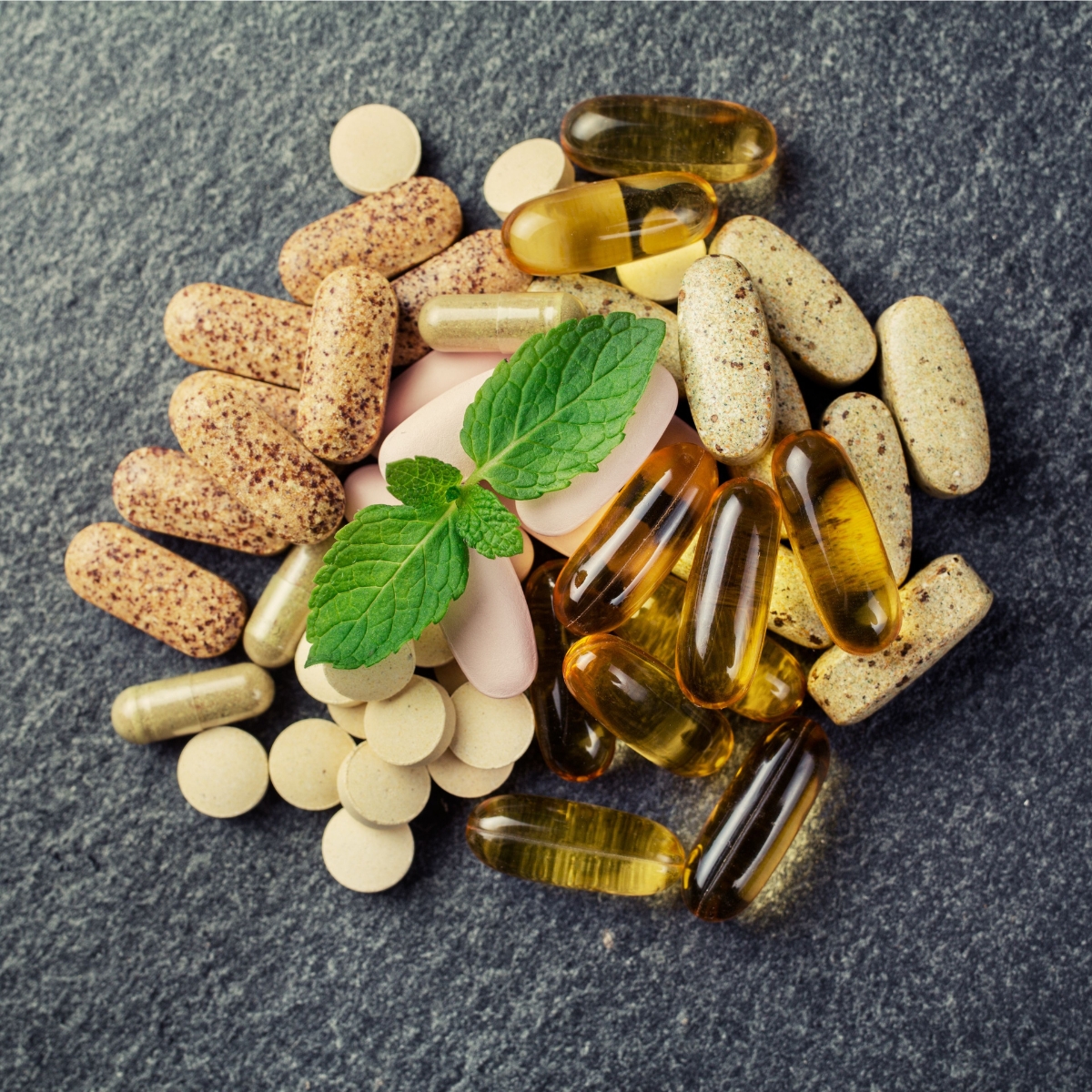

Ask anyone with a pulse, and they’ll tell you— health supplements are big business. The global health supplement market is worth over $150 billion, and it’s forecast to double over the next few years. In fact, it’ll probably jump a few million before you even finish reading this article.
Health supplements include vitamins, minerals, enzymes, herbs, amino acids, sports supplements, electrolytes…the list goes on. They come as pills, capsules, powders, gummies, drinks, and tinctures. And you can buy them in the supermarket, on every high street, and every corner of the internet.
If you want to sell health supplements, the million-dollar question is; how do you stand out when the market is so crowded?
This article discusses key ways to succeed in marketing health supplements against a highly competitive market and how to do it without breaking the bank.
Why Are Health Supplements So Popular?
Although everyone seems to sell health supplements, there’s never been a better time to do it. The ever-expanding boom in supplement sales shows room in the market for more players.
At the moment, the growing demand is driven by several factors.
After decades when fast food and quick processed meals were the go-tos, many are becoming more health-conscious. More people go to the gym or are taking up sports.
Alongside this, people are making big changes in their diets; veganism, gluten-free, keto, paleo, Mediterranean, flexitarian, alkaline, and so many other dietary lifestyles are on the rise. More people are fasting for health reasons. Many of these dietary changes need supplements.
We’re also living longer. Supplements help people experience life to the fullest during those extra years.
Throw in countless social media influencers, blog posts, celebrity endorsements and traditional media coverage, and you have increased awareness, interest, and demand.
It’s easy to assume that lots of this is just snake oil or a fad. But medical science backs supplement use, and people worldwide enjoy the life-changing benefits, myself included.
As some may know, soon after turning 40, I made some significant life changes. Already a vegetarian, I expanded to incorporate a keto diet. I also started exploring biohacking, began exercising more, paid more attention to nutrition, and incorporated regular periods of fasting into my life.
The results were amazing—a healthier, happier Prav.
Health supplements were a massive part of these changes. Whether it was salt tablets to help during periods of fasting, essential vitamins, PQQ for sharper focus, CoQ10 and quercetin for better heart health, or a string of other supplements, my physical and mental health has improved.
Understanding Customer Acquisition Cost and Lifetime Value
Marketing is a juggling act, but thankfully, it’s one with only two balls.
To get your supplements sold, you’ll need to focus on controlling two things; Customer Acquisition Cost (CAC) and Lifetime Value (LTV).
Your constant mission is to decrease the acquisition cost and increase the lifetime value for each customer.
The beauty of this merry marketing dance is that once you’ve got your head around getting this balance right, it will always work, whatever the product. Just don’t make the mistake so many others have made— getting them the wrong way around!
But just reading that simple statement off your screen doesn’t mean you’ve got this in the bag (yet).
Now it’s time to talk game plans…
Let’s Acquire Customers…
It’s 2023, and there are many ways to acquire new customers. But, you need high-converting leads that don’t cost the earth. There are a few ways of bringing people into your sales funnel, and it’s always best to use diverse techniques to make your strategy more robust.
Optimise Your Product Listing
Let’s start with the thin end of the funnel; your website. While your product page is the end goal, optimising them helps reduce the CAC. Get this right, and you’ll spend less bagging customers.
You could create generic product pages, filling them with samey content that mimics 99% of other sites.
All your marketing efforts lead to this page. If you’re half-arsing this, you’ll throw good money away for a handful of sales—high CAC, low LTV, and another health supplement business failure.
But don’t people want to read what they expect to read? Of course, they don’t.
What makes your product different? Why should people buy your whey protein powder instead of bagging the cheapest tub they can find?
It’s All About the USP
You need to define your unique selling proposition (USP) —what makes your vitamin D capsules pop?
Maybe your supplements are ethically-produced and ultra-sustainable. Are your Maharashtra Ashwagandha farmers the best-paid in India? Do they use environmentally friendly farming techniques? Were you first to the market with a particular product?
Whatever makes your product stand out from the crowd, own it.
It’s not enough to say, “These are great salt tablets.” Why are they great?
Separate yourself from the others selling Lion’s Mane coffee with a unique proposition, and you’ll see repeat customers with brand loyalty (and ultra-alert customers!).
Meeting Your Customer’s Needs
Next, you need to identify and meet your customer’s needs. The “three whys” technique helps you get to the bottom of potential customer objections.
Asking customers a single time “why” they’re not buying your product isn’t enough. You’ll get a superficial answer that doesn’t give you much actionable insight.
Ask once; they’ll say something like, “I can get similar products cheaper elsewhere.”
This might be true. Some established businesses use bulk buying power to shift loss-lead products in vast quantities. You’re not going to match or beat them on price. So, dig deeper.
“Why is that product cheaper?”
Expense is relative. Your product might have more active ingredients, making it a better value. Now dig some more:
“Why is price more important than value and outcome?”
Following the first “why” with two follow-up questions cuts to the emotional reason behind customer decision-making and gives you the real objections you must overcome.
To overcome objections, you’ll need to make a claim about your product and then back it up with a tonne of evidence.
Search Engine Optimisation
Bringing in your customers through organic traffic cuts your CAC. SEO helps your site rank naturally for the keywords that matter to your customers. Use those USPs and objections, and nail down a strategy to own terms related to them in the search engine results.
Health supplement keywords often come with high search volume. Boom! Lots of potential customers searching for your product. But the flipside is there’s a boatload of competition for these phrases. Niching down into your USPs can reduce the competition.
Branded keywords are also helpful. Although your new unknown business won’t gain much traction in search based on a new brand name alone, once your other marketing efforts start paying off, you’ll be glad you optimised every inch of your site for your name once people start searching for it.
Remember those highly-original, targeted product pages you created? Now’s the time to build everything around them. Further up your funnel, you’ll create content that points back to those product pages at the bottom. Think blogs, videos, podcasts, and more…
Here’s where you can pack in as much detail about a product as possible. Create informative and readable deep dives. Search engines and customers both love that!
Finally, get some articles that answer specific questions your customers might answer, like, “Does yerba mate help with brain fog?” or “Should I double scoop protein powder?”
Of course, SEO isn’t a one-time fix. It’s a constant task. The internet isn’t static. Every day, Google crawls billions of pages gathering information on new content. Every day, it finds more—tweaking your site’s ranking (and your competitors’) accordingly.
Between your existing competitors and the new, unknown supplement sellers, the drop shippers and affiliate sites built on instantly generated AI content and thrown up in the blink of an eye, your well-earned position in the rankings is always at stake.
Use analytics. Check and recheck your performance often. And, when traffic is slowing, ask the ‘three whys!’
Getting Social
Customers in the health supplement market are clued-up. Along with the thirst for self-improvement comes a quest for knowledge. Social media is full of groups and influencers focused on supplements.
Building an organic presence on all the top social platforms is a no-brainer. So, do it. Create short-form content, visuals that stall the scroll, and above all else, videos.
All this content needs to ooze your USP. It should tackle your customer’s objections head-on and back these claims with digestible, quantifiable, scientific proof.
Social ads are a great way to target and build your audience. Again, nail home that USP and always provide proof!
Since social ads require targets, analyse. Measure specific product performance, evaluate the effectiveness of your proposition, and compare market demographics. If you’re not honing in on analytics, you’ll miss the mark and drive up your CAC.
Paid Search Ads
Paid ads will eat into your marketing budget, but they can help— if you work them the same way as your social media ads. Use separate landing pages on your site to track and compare the performance of varying ads.
Now Let’s Retarget and Increase Value…
Once you’ve acquired customers, don’t let them become a one-night stand. Message them the next day to check in.
“Did our B12 hit the spot?”
Let your customer know you’re thinking of them, and make sure they’re thinking about you!
That’s how to turn a sale into a long-term relationship — and make your CAC go further.
Once you have trust and connection, why not take it to the next level? I’m not suggesting that you move in and have babies, but why not build on the value of your sales?
Build an Email List
Your email list is where magic happens. Even against the mightiest marketing methods, email still offers the highest ROI.
Once you’ve sold to your customer once, get in their inbox often. Keep reminding them you exist. When that month’s supply of magnesium capsules runs out, that email you sent two days previously will come to mind.
Grow your list naturally from sales. Whatever you do, don’t purchase a list! Irrelevant emails get ignored or land you on the spam naughty step.
If you’ve got a new customer email address, don’t wait. A short “welcome” email string lets you give them a special offer, highlight ways to get the best from the product, share customer feedback, highlight other products, and, finally, remind them of the scarcity and urgency of their initial offer.
Another email flow should target abandoned sales. Your customer had zinc capsules in their basket; there was a knock at the door, an unexpected string of events happened, and the customer forgot all about the order.
Don’t let forgetfulness overrule definite intent. If you have the means, retarget that customer.
Make It Easy With Subscriptions
Customers shouldn’t have to be reminded to order more vitamin D. Give them the option to buy monthly subscriptions. If they don’t take it up on their first purchase, email them!
Even better than that, add value to your subscription. Make it a membership. Send your customers exclusive offers and high-value tips.
Upsell
If you’ve ever been asked if you want to “go large” in McDonald’s, you know what the upsell is. Time and again, fast food has taught us that when a customer has their credit card in their hand— it’s the best time to offer them something extra.
At the final stages of any transaction, offer your customer something else. Recommend a product that complements the one in the basket. This adds value to your offering while improving customer experience.
Another way is to immediately target your customer for several more of the same product straight after the sale. “Buy another two and get a discount!” — after all, they’ve just shown more than a passing interest in your supplement!
Cross-Sell
Cross-selling is also a must. While your customer is buying a product, show them other items that complement their initial purchase.
Linking other products and offers by mentioning “customers who bought” is also a powerful way of increasing LTV.
Automate
Finally, for everything we’ve discussed, use automation! Using the right email marketing tools, analytics, and e-commerce plugins, you can streamline your entire marketing flow, saving you time and reducing your CAC.
Supercharge Your Health Supplement Marketing
Jumping into this crowded market might feel like a sink or swim scenario. But the surest way to succeed is to prioritise maintaining low acquisition costs and high lifetime value rates. Promote your USPs to stand out, handle objections, and deliver sold proof that turns one-time customers into life-long friends.
Want more insights in your inbox? Scroll down and subscribe!





Your thoughts.